What home styles does Tampa have?
Tampa has many, because its neighborhoods grew in different decades. The City’s Hyde Park design guidelines give the clearest official list. They say the stylistic influences there “range from revivals (Queen Anne, Tudor, Classical, Colonial, French Second Empire and Mediterranean) to new directions in architecture (Prairie and Bungalow).”
The guidelines add two more groups: vernacular homes, which lack academic influences, and eclectic homes, which mix influences. The guidelines also say the district stays unified by “continuity in landscape, street orientation, and site relationships,” even though styles vary.
| Style named in the Hyde Park guidelines | Group |
|---|---|
| Queen Anne, Tudor, Classical, Colonial, French Second Empire, Mediterranean | Revival styles |
| Prairie, Bungalow | New directions in architecture |
| Vernacular | Homes without academic influences |
| Eclectic | Homes that mix influences |
This list covers one historic district. It is not a list for all of Tampa.
How do you recognize the other styles?
The Hyde Park guidelines give short descriptions you can use as a field guide:
- Queen Anne Revival “is characterized by asymmetrical massing, varied roof forms, turrets, bays and pavilions.”
- Tudor Revival draws on sixteenth century England, with mock half-timbering over stucco, steeply pitched rooflines, casement windows, and dominant fireplaces and chimneys.
- Bungalow homes typically have exposed beams and rafters, porches for outdoor living, numerous windows and wide eaves.
The guidelines say the true concept of the bungalow was “craftsmanship, harmony, simplicity of design, and association with nature.” These are the City’s descriptions of historic styles. They are not rules for new homes.
What is Mediterranean Revival style?
It is the style most tied to Florida’s 1920s boom. The Hyde Park guidelines call it “a style which adapted readily to the cultural heritage and the climate of Florida” and “a visual history of the Florida Boom.” They describe stucco, tile and cast stone in asymmetrical compositions. The influences range from Italian villas (Tuscan Revival) to Islamic-Spanish palaces (Spanish Revival) to Spanish colonial missions (Mission Revival).
The guidelines list features you can spot from the street: loggias, arches, towers, grillwork, decorative ceramics and exposed beams. They also name “decorative scuppers to drain flat roofs.” A scupper is an opening in a wall that lets rainwater run off a flat roof. That detail shows how an older style solved a water problem.
Where can you see it in Tampa?
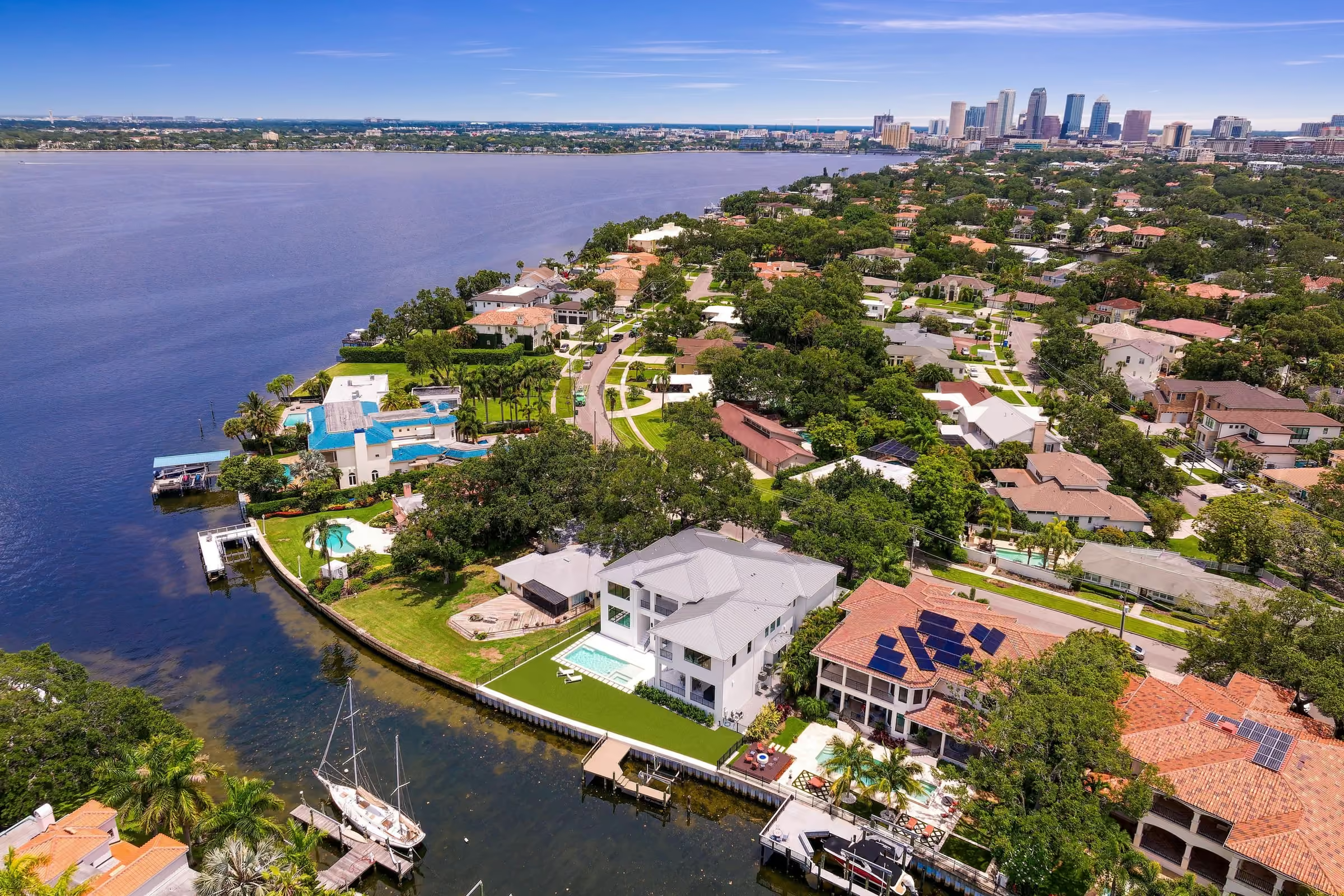
The City’s Beach Park page is one record. It says Beach Park was developed in the early 1920s on the waterfront of Old Tampa Bay and that many of the original Mediterranean style mansions remain. The page also describes large oaks, winding streets and a wide variety of architectural styles.
Beach Park is a place to study the style, not a list of who builds there. Read our Beach Park neighborhood page for the City’s other facts on the area. The Hyde Park neighborhood page covers the district where the design guidelines apply.
Does historic review change what you can build?
In a local historic district, yes. The Hyde Park guidelines say a property owner “must obtain a Certificate of Appropriateness from the A.R.C.” (the Architectural Review Commission) before a building permit is issued. They recommend contacting staff early for rehabilitation, new construction or an addition.
Not every parcel is in a historic district. Check yours with the City. A certificate of appropriateness applies only where historic review applies.
Where does modern design fit?
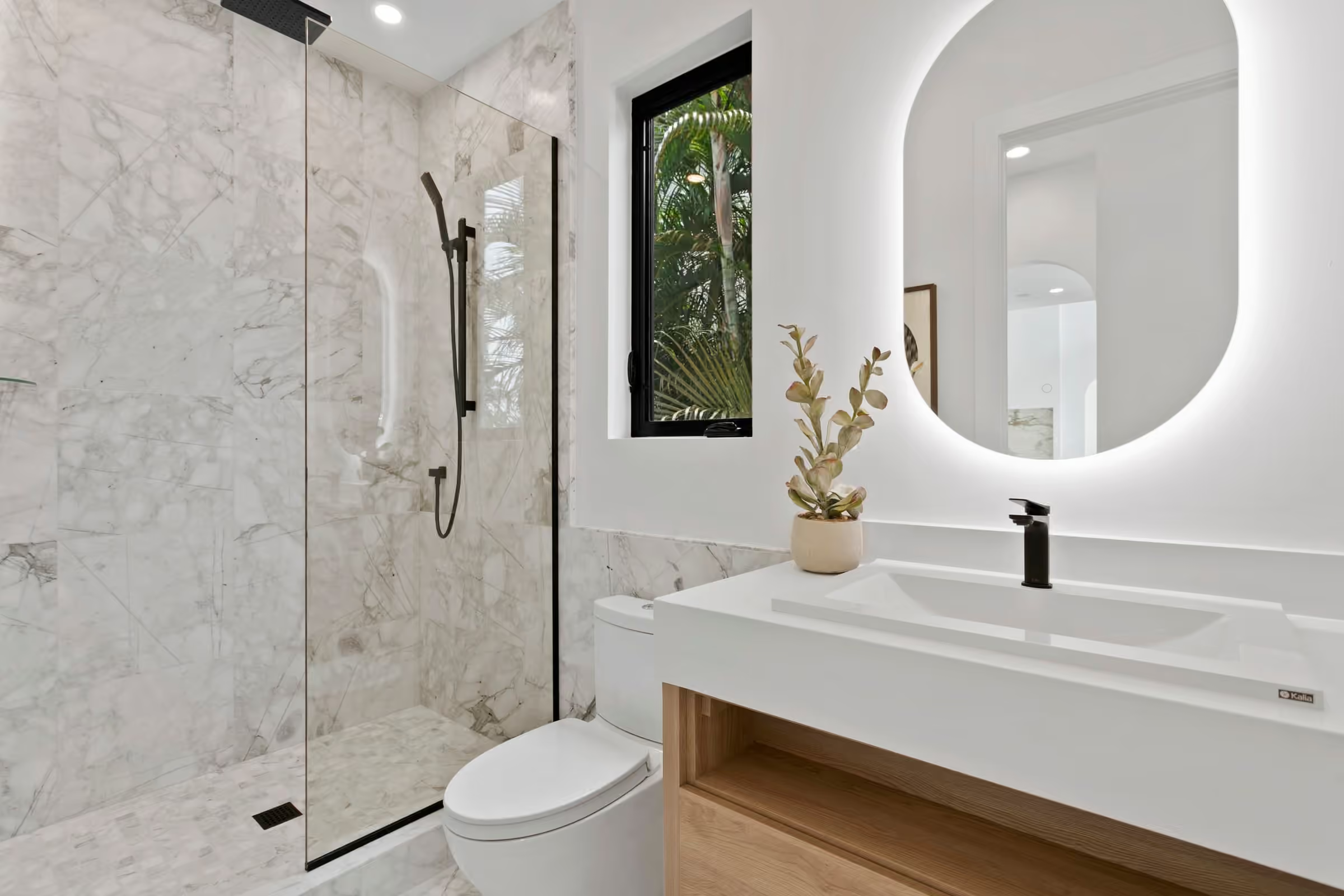
Modern design is a newer chapter in the same city. Halo Homes describes its own work with the words “modern luxury,” “contemporary flair,” “sleek modern homes” and “sprawling estates.” You can read more about that on the our story page and on luxury home construction.
For any style, the same practical questions come first. What is the lot’s zoning? What flood zone is it in? Is it inside a historic district? Those answers can shape a design before taste does.
Do flood and wind rules change with style?
The flood rule follows the lot, not the style. The City of Tampa says that to build in a FEMA special flood hazard area, you need an Elevation Certificate with your construction permit application, completed by a Professional Engineer or Professional Land Surveyor. The requirement follows the flood zone. It does not depend on whether the house is Mediterranean Revival, Bungalow or modern.
A design team works the style around the required floor height. Wind is a separate topic. Read more about impact windows in the glossary. For elevation rules, see building in a flood zone.
How can you use this list?
Use it as vocabulary. When you bring photos to a designer, name what you like in plain terms: the roofline, the porch, the window pattern, the materials. A shared vocabulary cuts the number of drawings needed to land on a direction. It also helps you tell a style you love from a feature you only want one of.
What should you decide first?
- Check the flood zone and the zoning for the lot.
- Check whether the lot sits in a local historic district.
- Collect photos of the styles you like, and note why you like them.
- Share the list with a designer and a builder at the start.
What is the next step?
If you want to talk about a modern or luxury home on your lot, call Halo Homes at (813) 956-1972 or send a note on the contact page. Bring your photos and your questions about the site.
Frequently asked questions
What is Mediterranean Revival style?
The Hyde Park design guidelines describe it as a style that adapted readily to the climate of Florida and became a visual history of the Florida Boom. They list stucco, tile, cast stone, loggias, arches and decorative scuppers to drain flat roofs among its features.
Do I need approval to change the look of a house in Hyde Park?
In the Hyde Park Historic District, the guidelines say a property owner must obtain a Certificate of Appropriateness from the Architectural Review Commission before a building permit is issued. The guidelines advise contacting staff early for rehabilitation, new construction or an addition.
Does a modern design change flood rules?
The City of Tampa ties its flood permit requirements to the flood zone, not to the style. In a FEMA special flood hazard area, the City requires an elevation certificate with the construction permit application, whatever the house looks like.
Terms on this page
Sources
- City of Tampa: Hyde Park Design Guidelines (styles)
- City of Tampa: Hyde Park Design Guidelines (Mediterranean Revival)
- City of Tampa: Hyde Park Design Guidelines (approval)
- City of Tampa: Beach Park
- City of Tampa: Flood Information
Written for Halo Homes and checked against the sources above on October 29, 2026. City, county and code rules change, so check the linked page before you act.