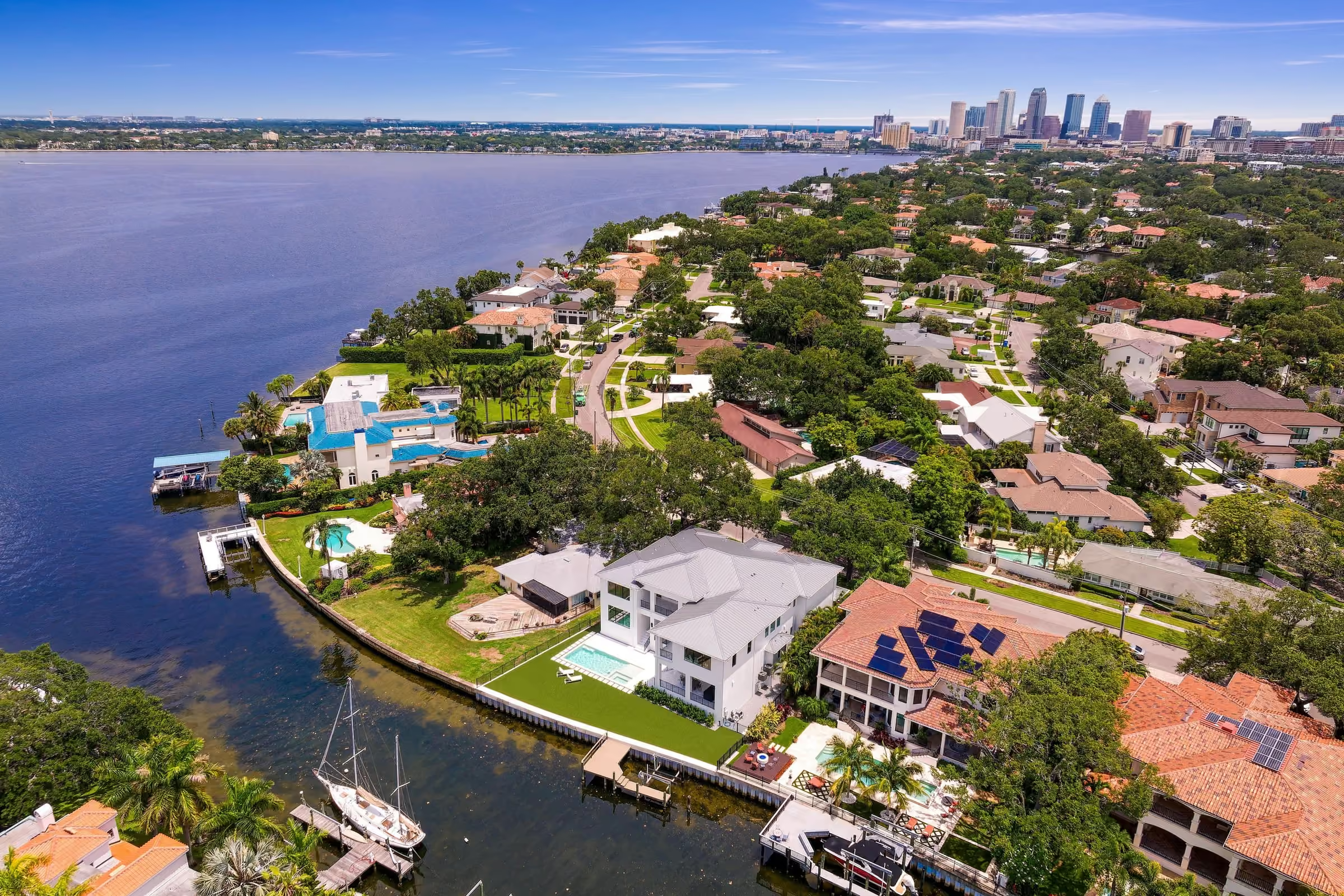
What should I check before I buy a lot?
Check the flood zone, the zoning, the historic district status, the trees and the existing structure, in that order. Each answer can change what you can build, how high it sits and how much work the site needs. Most of the answers come from free City pages.
Start with one question. Is the lot inside the City of Tampa, or in unincorporated Hillsborough County? The two have different permit offices and checklists. This guide covers City of Tampa rules. Where it uses a Hillsborough County page, it says so.
Use this table as a short list to work through.
| Check | What to find out | Where to look |
|---|---|---|
| Flood zone | FEMA zone and base flood elevation | City Stormwater, FEMA map service |
| Zoning | District, minimum lot size, setbacks, height limit | City zoning map and code |
| Historic district | Whether the lot is in a local district | City historic preservation maps |
| Trees | Size, species and location of trees | Survey, arborist, City tree page |
| Existing structure | What stands there and what removal involves | City Construction Services |
| Survey | Boundaries, elevations, easements | Florida licensed surveyor |
The City’s own advice points the same way. Its flood page says you may want to check its flood maps before purchasing a property.
How do I find the flood zone and base flood elevation?
Call the City Stormwater Department at (813) 274-3101 with the street address. The City says it provides flood zone information on request, and that there is no charge for the service. It asks for the street address and, if you have them, the subdivision, lot and block number.
The City says it can provide three kinds of information:
- Where the property sits in relation to the special flood hazard area, as shown on the current flood insurance rate map.
- Flood insurance data for the site, such as the zone and the base flood elevation or depth.
- Elevation certificates for new and substantially improved structures in the special flood hazard area.
You can also view the official FEMA map panels at the FEMA Flood Map Service Center. The City notes that its own maps may show areas of localized flooding that FEMA maps do not. A lot can have a mild FEMA zone and still collect water in a heavy storm. Tampa’s flood page says the most frequent flooding is localized flooding from rainy season storms and tropical storms, because there is little topographic relief.
The City also reminds residents that the evacuation zone and the flood zone are not the same thing. Check both.
Why does the elevation number matter before a purchase? If the lot is in a special flood hazard area, the City requires an elevation certificate from a Professional Engineer or Professional Land Surveyor with the construction permit application. The base flood elevation, plus any extra height the rules require, sets how high the lowest floor goes. A higher floor changes design, stairs, grading and cost. Ask for the number before you set a price.
For a County lot, Hillsborough County points applicants to its Flood Zone Viewer and the FEMA map service to verify the zoning district, flood hazard areas and base flood elevations.
Two guides go deeper. Read the base flood elevation and freeboard guide for the numbers, and the FEMA 50 percent rule guide if the lot holds an existing house. The pillar page on building in a flood zone in Tampa pulls it together.
How do I find the zoning district and setbacks?
Find the lot’s zoning district on the City’s interactive zoning map, then read the district’s rules in the zoning code. The zoning district sets the minimum lot size, the yard setbacks and the maximum height. A setback is the required distance between a building and a property line. Together these define the area where a house may sit.
A City presentation from January 2023 lists the single-family districts as RS-150, RS-100, RS-75, RS-60 and RS-50. It reproduces the code’s Table 4-2 with the area, height, bulk and placement rules. The table below shows its numbers for those districts. This is a 2023 presentation, and zoning rules can change, so confirm the current numbers with the City before you rely on them.
| District | Minimum lot area (sq ft) | Minimum lot width (ft) | Front yard (ft) | Side yard (ft) | Rear yard, interior lot / corner lot (ft) | Maximum height (ft) |
|---|---|---|---|---|---|---|
| RS-150 | 15,000 | 100 | 30 | 15 | 20 / 12 | 35 |
| RS-100 | 10,000 | 100 | 25 | 7 | 20 / 12 | 35 |
| RS-75 | 7,500 | 75 | 25 | 7 | 20 / 12 | 35 |
| RS-60 | 6,000 | 60 | 25 | 7 | 20 / 20 | 35 |
| RS-50 | 5,000 | 50 | 20 | 7 | 20 / 20 | 35 |
The table also has a separate corner column and footnotes that affect how a number applies to a specific lot. The presentation shows no floor area ratio for these districts. Read the full table for your district.
The presentation also defines a zoning lot. It is a lot or combination of lots shown on an application for a zoning compliance permit that together meet all applicable requirements for development. That matters if you plan to combine two parcels.
Other rules in the same presentation can shape a site plan. It lists setbacks for accessory structures such as a garage. It sets the setback to a garage or carport entrance at 18 feet for a one-car garage and 10 feet for a two-car garage, with the stricter rule applying where the district asks for more. It also lists fence heights for yards.
For a plain-language walk through the numbers, use the Tampa zoning, setbacks and height guide. The zoning glossary entry gives the short definition. The guide on building a custom home in South Tampa shows how these checks apply on a South Tampa lot.
Is the lot in a historic district?
Check the City’s historic district maps before you buy. The City reports four local historic districts and 64 local historic landmarks. Development in the districts is reviewed by architectural boards. The City says applications for a certificate of appropriateness are needed for new construction, additions and exterior repairs.
The City’s page links district maps for Hyde Park, Seminole Heights and Tampa Heights. A lot inside a district needs approval before the building permit. A lot outside a district does not.
The Hyde Park district was expanded to the north in 2023, so an older map may be wrong. Read the Hyde Park historic district guide and the Hyde Park neighborhood page for that case. The local historic district glossary entry explains the term.
Review adds time and design limits. Learn about them before you close, not after.
What do trees add to the plan?
Trees can decide where the house, driveway and utilities go. The City protects trees under section 27-284 of its code. It says removing a protected tree without a permit is an irreparable or irreversible violation that can bring fines.
The City’s tree page gives these rules:
- Pruning a tree 24 inches or more in diameter at breast height (DBH) needs a permit.
- Protected trees, such as oaks, pines and elms, are those greater than 5 inches in diameter at 4.5 feet above the ground.
- The tree removal permit goes through the City’s online permit system, and Construction Services staff answer questions at (813) 274-3100, Option 1.
The City’s plan review page adds distances for work near large trees. Specimen trees at 24 inches DBH need a minimum 15 foot protective distance. Grand trees at 32 inches DBH or larger need a minimum 20 foot distance from construction. That page states these distances in its driveway requirements, so ask staff how they apply to a house footprint.
The permit application guide asks the site plan to show the location, species and size of every tree within 20 feet of the construction area. It also asks for tree barricade locations and a tree mitigation table. A topographical survey must show the same trees, and a certified arborist report can complement the survey.
What does this mean before a purchase? Walk the lot with a surveyor or arborist. Ask which trees count as protected and where the protective distances fall. A large oak near the front corner can shrink the buildable area more than a setback does.
Should I buy the lot before choosing a builder?
You can do either, and the checks above come first in both cases. Buying first fixes your site and starts your carrying costs. Talking to a builder first lets you test your plans against the lot before you commit money to the purchase.
Policies on this differ from builder to builder, so ask each one directly, including us.
Whichever order you choose, do these things before closing:
- Get the flood zone and base flood elevation in writing from the City.
- Confirm the zoning district and read its setbacks and height limit.
- Check the historic district maps.
- Order a survey from a Florida licensed surveyor. The City’s permit application guide requires surveys to be signed and sealed by one.
- Have trees located and identified.
- Ask the City about any existing structure and what removal needs.
- Ask your lender how a lot purchase and a build fit together. The construction loan guide explains the basics.
Halo Homes works through Visualize, Design and Build, and the custom home construction page describes the service. The build on your lot page covers the full path.
What is the cost of surprises?
Surprises on a lot cost money because they change the design after you have bought. This guide lists the sources of surprise. It gives no dollar amounts, because no official source we opened prices them for Tampa.
| Surprise | Why it changes the plan |
|---|---|
| High flood elevation | The lowest floor must sit higher, which affects height, stairs and grading |
| Local flooding not on FEMA maps | The City’s own maps may show risk that the FEMA map does not |
| Small buildable area | Setbacks and height limits leave less room than the lot suggests |
| Protected or grand trees | Protective distances and mitigation affect the footprint |
| Historic review | Approval comes before the building permit |
| Existing structure | Removal is separate work, and flood rules may apply to what replaces it |
| Seawall on waterfront lots | A seawall can need repair or replacement |
| Survey surprises | Easements or boundary issues can limit where you build |
If an existing house is on the lot, the 50 percent rule can matter. The City says that if improvements or repairs exceed 50 percent of a home’s value in a special flood hazard area, the house must be brought up to current code, including elevation above the base flood elevation. The teardown and rebuild guide walks through that case.
Final advice: a lot that looks cheap can be expensive to build on. A lot that looks expensive may need less site work. Price the lot and the site work together. The cost to build a custom home in Tampa page shows what to include.
What is the next step?
If you are weighing a lot, bring the address and the questions above. Halo Homes can talk through how your plans might fit the site. Call (813) 956-1972 or send a note through the contact page.
Facts checked October 2026 against the sources listed on this page.
Frequently asked questions
What should I check before buying a lot in Tampa?
Check the FEMA flood zone and base flood elevation, the zoning district with its setbacks and height limit, whether the lot is in a local historic district, the size and species of trees, and any existing structure. Also confirm whether the lot is inside the City of Tampa or in unincorporated Hillsborough County.
How do I find the flood zone for a Tampa lot?
Call the City Stormwater Department at (813) 274-3101 with the street address. The City says it provides flood zone and base flood elevation information from the current map and that the service is free. You can also view official FEMA map panels at msc.fema.gov. City maps may show local flooding FEMA maps miss.
Do protected trees stop me from building on a lot?
Not by themselves, but they shape the plan. The City protects trees under its code and asks permit applications to show trees within 20 feet of the work. Grand trees at 32 inches DBH or larger need a 20 foot protective distance from construction, per the City's plan review page.
Should I buy a lot before I choose a builder?
There is no single rule. Buying first fixes your site. Talking to a builder first lets you test the lot against your plans before you commit money. Whichever order you pick, run the flood, zoning, tree and historic checks before closing, and ask any builder how they handle lot questions.
Can I buy a lot with an old house and rebuild?
Often people do, but check the same items plus what removing the house involves. The flood rules may differ from the old house, and a historic district would require review. See our teardown and rebuild guide for the checks, and ask the City about demolition steps for the address.
Terms on this page
Sources
- City of Tampa: Flooding
- City of Tampa: Flooding (elevation certificate)
- City of Tampa: ABCs of Zoning (January 11, 2023 presentation)
- City of Tampa: Tree Information
- City of Tampa: Residential Plan Review
- City of Tampa: Architectural Review & Historic Preservation
- City of Tampa: Residential New Construction Permit Application Guide
- Hillsborough County: Special Flood Hazard Area Requirements
Written for Halo Homes and checked against the sources above on October 29, 2026. City, county and code rules change, so check the linked page before you act.